

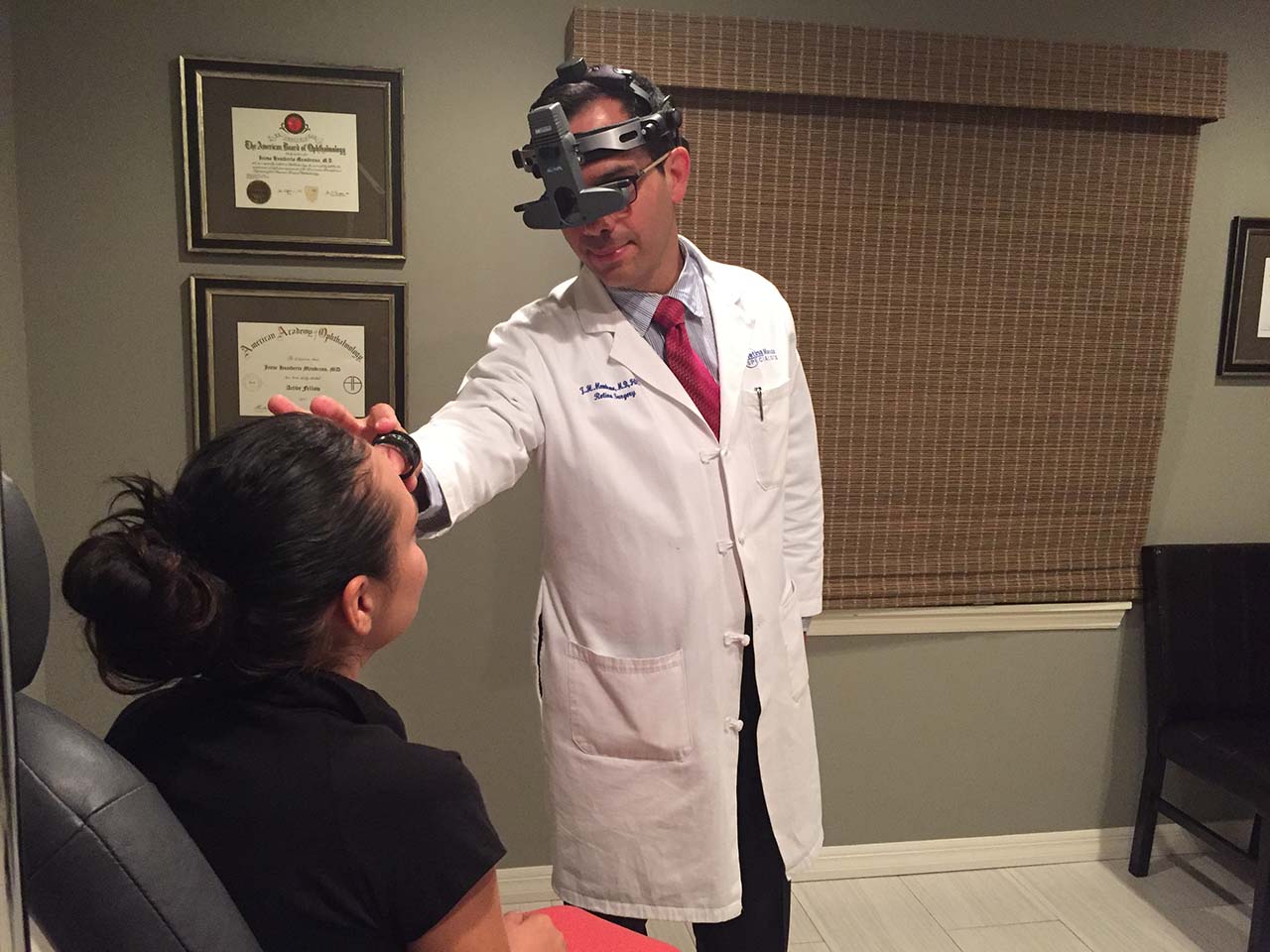
First Visit
What to expect during your visit?
- Patient History – You will be asked about your general and eye health.
- Vision Testing – You will read from a chart to test your visual function.
- Tonometry – The pressure in your eyes will be measured.
- Dilation – Your pupils will be dilated. Dilation makes your pupils open wide, so the doctor can get a clear view of the inside of your eye. Dilation will make your eye sensitive to light and typically lasts up to 3 hours. Many patients prefer to bring someone to drive them to and from appointments.
- Eye Exam – Your doctor will perform a thorough examination of your eyes.
- Other Testing – Depending on your eye condition you may require additional testing.
How long will the appointment take?
- Patients who are visiting us for the first time can be in our office for a few hours as a series of diagnostic testing will be performed. Diagnostic tests will help the physician determine the diagnosis and proper treatment options.
- If you are coming in for a follow-up appointment, your office visit can last up to a couple hours depending on testing needed.
What to bring to your visit?
- List of all health conditions and allergies
- List of all your medications and supplements
- Your questions and concerns you have about your eyes
See the insurance page to find out what insurances we accept. For your convenience, you can complete your patient forms prior to your first visit.
When to get help right away
Call 911 now if you have sudden loss of vision in one or both eyes, especially with weakness, numbness, facial droop, trouble speaking, or a severe headache. These can be signs of a stroke or a blocked artery in the eye, which need a hospital emergency department immediately.
Call us at 407-931-1510 if you notice:
- A sudden increase in floaters (spots, cobwebs, or specks)
- Flashes of light in your side vision
- A shadow, curtain, or veil moving across part of your vision
- Sudden blurred, distorted, or wavy central vision
- Eye pain, increasing redness, or worsening vision after an injection or eye surgery
If you cannot reach us, or your symptoms get worse, go to the nearest emergency room or call 911. Do not wait for a call back.
Do not use email or social media for urgent problems; they are not monitored around the clock.